
Mobile App Development Cost in 2026: Real Budgets by App Type
You ask three agencies for a quote and get three numbers: $25,000, $90,000 and $240,000. The brief was identical. That gap is why mobile app development cost is one of the hardest line items to budget, and why so many projects stall halfway through.
This guide gives you realistic 2026 ranges by app type, explains what actually moves the price, and shows where budgets quietly leak. It is written for founders and operations leaders who need a number they can defend to a finance team.
A mobile app is software that runs on iOS, Android or both, usually backed by a server, a database and an admin panel. Most of the cost sits in that backend and in design work, not in the screens users see.
How Much Does Mobile App Development Cost in 2026?
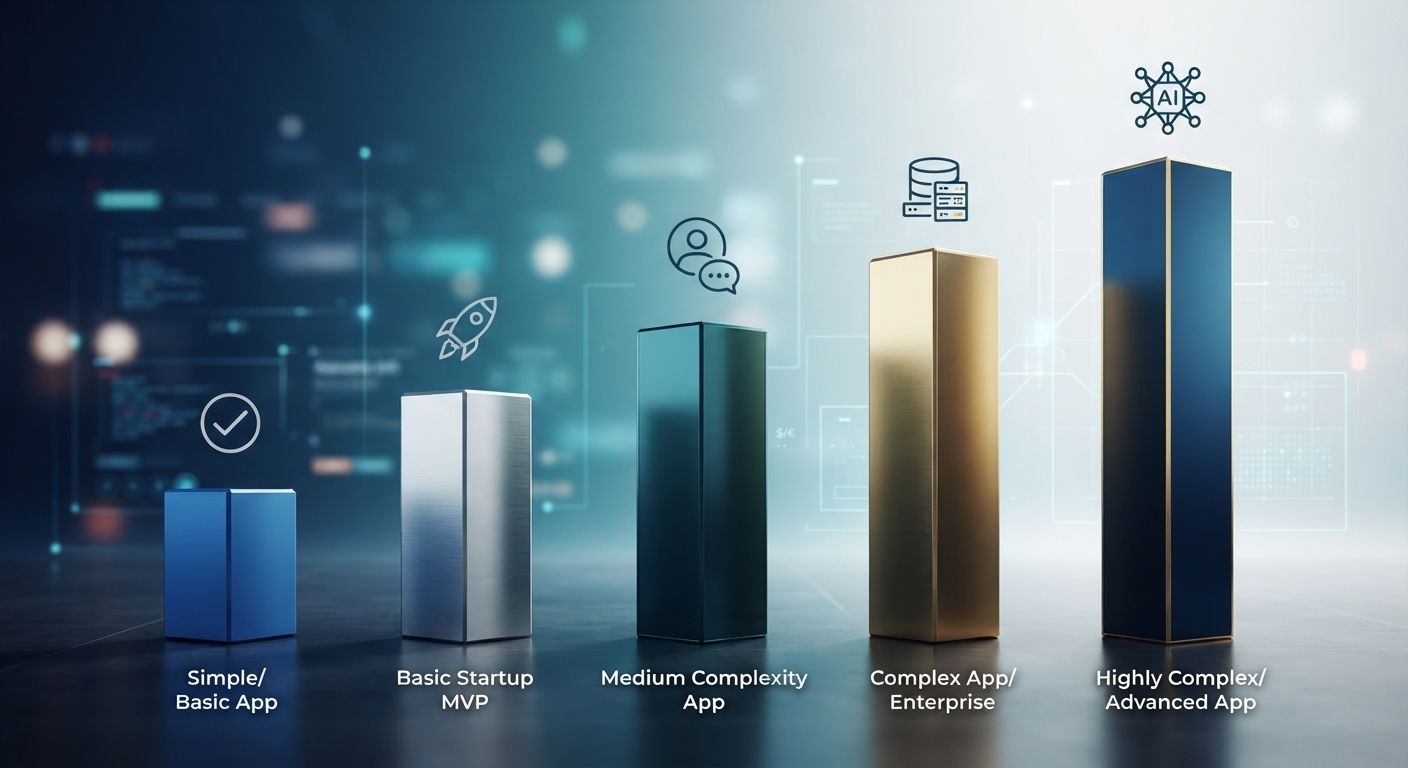
Mobile app development cost in 2026 typically runs from $15,000 for a simple app to $300,000 or more for a complex platform. Most business apps for SMEs land between $40,000 and $120,000, delivered over three to eight months by a small team of designers, engineers and a QA tester.
| App type | Typical budget | Timeline | Examples |
|---|---|---|---|
| Simple app | $15,000-$40,000 | 2-4 months | Booking, checklists, content app |
| Mid-complexity app | $40,000-$120,000 | 4-8 months | Marketplace MVP, field service, e-commerce |
| Complex platform | $120,000-$300,000+ | 8-14 months | Fintech, telehealth, live logistics |
| AI feature add-on | +$15,000-$80,000 | +1-3 months | Assistant, recommendations, scanning |
These figures assume a professional team in a mid-cost market and one round of design iteration. Hourly rates vary widely: US teams often bill $120 to $200, while Eastern Europe and South Asia range from $30 to $80. Our guide to custom software development cost applies the same logic to web platforms and back-office systems.
A healthy budget splits roughly like this:
- Discovery and design: 15% to 20%
- Development: 45% to 55%
- Testing and QA: 15% to 20%
- Project management: about 10%
Any mobile app development cost estimate that lacks this kind of breakdown is a guess.
What Drives Mobile App Development Cost
Five factors explain most of the variance between quotes. Knowing them lets you challenge an estimate line by line instead of accepting it whole.
- Features and complexity. A login and a profile screen are cheap. Payments, real-time chat, offline sync and maps each add weeks. List your features before asking for any quote.
- Platforms. iOS only, Android only, or both. Supporting both natively nearly doubles the front-end work.
- Design depth. Template-based interfaces are inexpensive. Custom UX research, branded animation and an app-specific design system can add $5,000 to $25,000.
- Backend and integrations. Connections to a CRM, ERP, payment gateway or HR system often take about 40% of the build. Poorly documented third-party APIs make this worse.
- Compliance and security. Health data, card payments and personal data in the EU or UAE add audits, encryption and documentation, typically 10% to 25% on top.
A useful rule of thumb: backend, integrations and testing together usually account for about half of the mobile app development cost, while screen design and front-end work make up the rest.
Native vs Cross-Platform: Which Costs Less?
Cross-platform frameworks such as Flutter and React Native usually cut build cost by 25% to 40% compared with building separate native iOS and Android apps, because one codebase serves both. Native still wins for graphics-heavy, hardware-intensive or highly polished apps, where the extra spend buys performance and platform-specific behavior.
Choose cross-platform when:
- You need iOS and Android at launch on a single budget.
- The app is mostly forms, lists, dashboards, bookings or content.
- Speed to market matters more than platform-specific polish.
Choose native when:
- The app relies on heavy graphics, augmented reality, advanced camera or Bluetooth features.
- You need new platform features on release day.
- Performance is the product, as in gaming or video editing.
Platform choice alone can swing mobile app development cost by a third, so settle it before you request quotes, not after.
Who Builds It: Team Models and Their Price Tags
Who builds the app matters as much as what you build. Team choice changes mobile app development cost as much as features do.
- Freelancers: $30 to $100 an hour. The lowest rate, but you manage design, QA and continuity yourself. Best for simple apps.
- In-house team: A core team of five often costs $500,000 or more per year in salary and overhead. It makes sense when the app is your main product for years.
- US or UK agency: $100 to $200 an hour. Design, engineering, QA and project management sit under one contract.
- Offshore or nearshore partner: $35 to $90 an hour with an agency structure. Strong value when communication and process are mature. Our guide to software development outsourcing compares engagement models in detail.
The cheapest hourly rate is rarely the cheapest project. A slower team that rebuilds screens twice costs more than a pricier team that gets it right once.
Hidden Costs That Break App Budgets
Launch day is not the finish line. These items are routinely missing from the first quote:
- Maintenance: 15% to 20% of the build cost every year for OS updates, security patches and bug fixes.
- Cloud hosting: $100 to $2,000 a month depending on traffic, storage and video or file handling.
- Third-party services: Maps, SMS, email, push notifications, analytics and payment fees that scale with usage.
- Store fees and reviews: Apple charges $99 a year and Google a one-time $25, plus time for rejected submissions.
- Legal and privacy: Privacy policy, terms, data protection reviews and consent flows.
- Marketing and app store optimization: An app nobody finds delivers no return, whatever it cost to build.
Over three years, the real mobile app development cost often reaches 1.5 to 2 times the original build quote. Put maintenance and hosting in the first budget, not the second.
How to Lower Mobile App Development Cost Without Cutting Quality
The goal is to lower mobile app development cost by removing unneeded work, not by squeezing the team. Follow these steps:
- Write a one-page scope. Split features into must-have, should-have and later.
- Launch an MVP around one core workflow. Our MVP development cost guide shows what a first release should and should not include.
- Default to cross-platform. Go native only when a hardware or performance need demands it.
- Reuse proven components. Authentication, payments and notifications should be integrated, not invented.
- Fix scope per milestone. Agree upfront how change requests are priced.
- Test with ten real users before you build the next batch of features.
The most common mistakes are cramming every feature into version one, skipping a paid discovery phase, and picking the lowest bid without checking comparable work. Each one creates rework, and rework is where budgets disappear.
What Should a Good App Estimate Include?
A good estimate lists work by feature, not as one lump sum. It shows hours or days per feature, the rate used, the team roles involved, what is excluded, and how change requests are priced. If a quote lacks any of these, you cannot compare it with another bid.
Before you sign, ask every vendor:
- Which roles are on the team, and are they full-time or shared?
- What is excluded: backend, admin panel, QA, store submission, post-launch support?
- How are changes priced once the scope is agreed?
- Who owns the source code and the cloud accounts?
- Can you speak to a client with a similar app?
Our advice on choosing a custom software development company covers the wider vetting process.
Conclusion
Realistic mobile app development cost depends on scope, platforms, integrations and the team you hire. Budget $15,000 to $40,000 for a focused simple app, $40,000 to $120,000 for most business apps, and add 15% to 20% a year for upkeep. Start with an MVP, price every change, and insist on estimates broken down by feature.
If you are ready to scope your app, Wavenest builds custom mobile apps and AI automation solutions around your actual workflows, so get in touch for an estimate based on your real feature list.